The light rig: a lamp in the visitor's hand
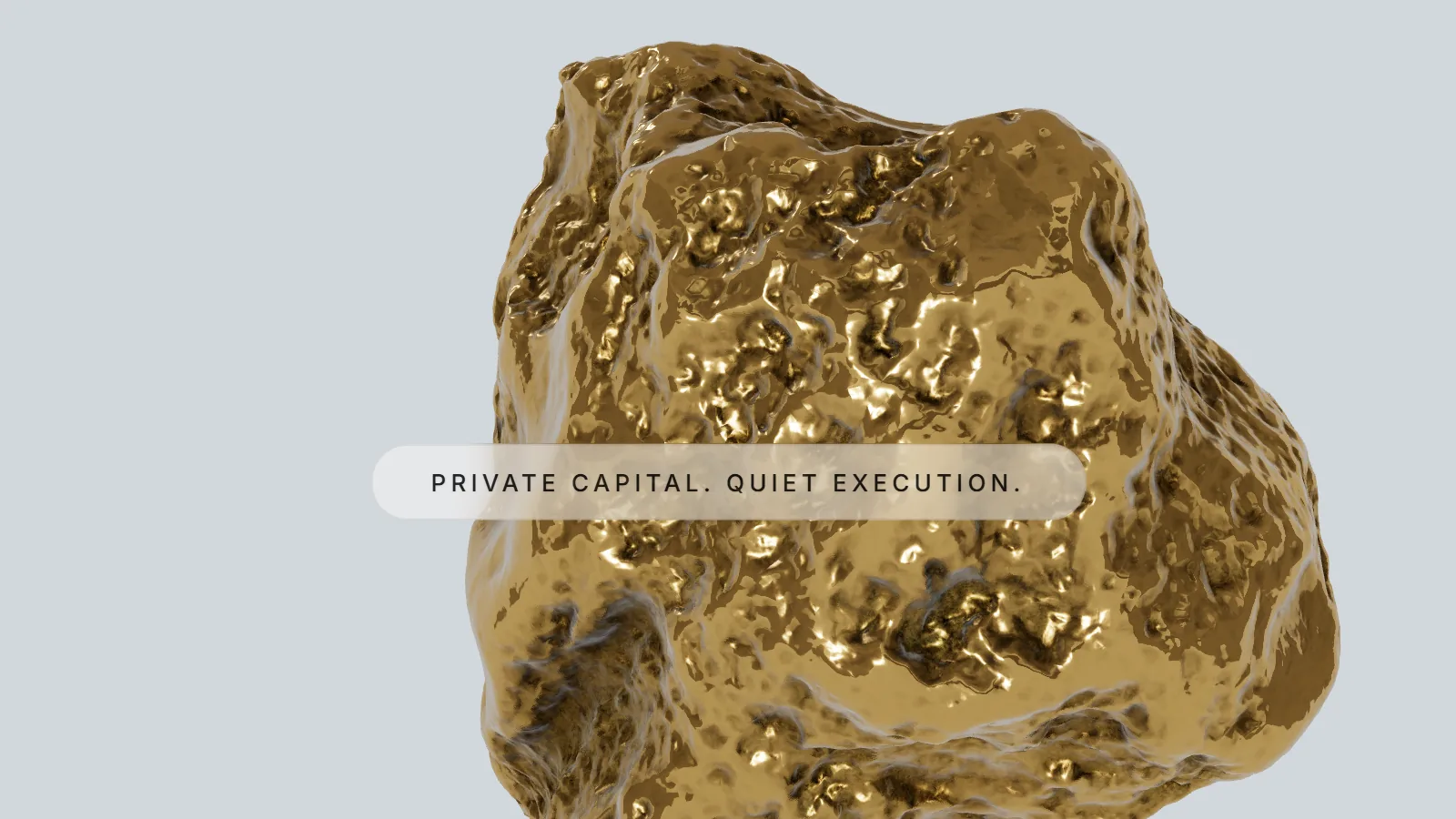
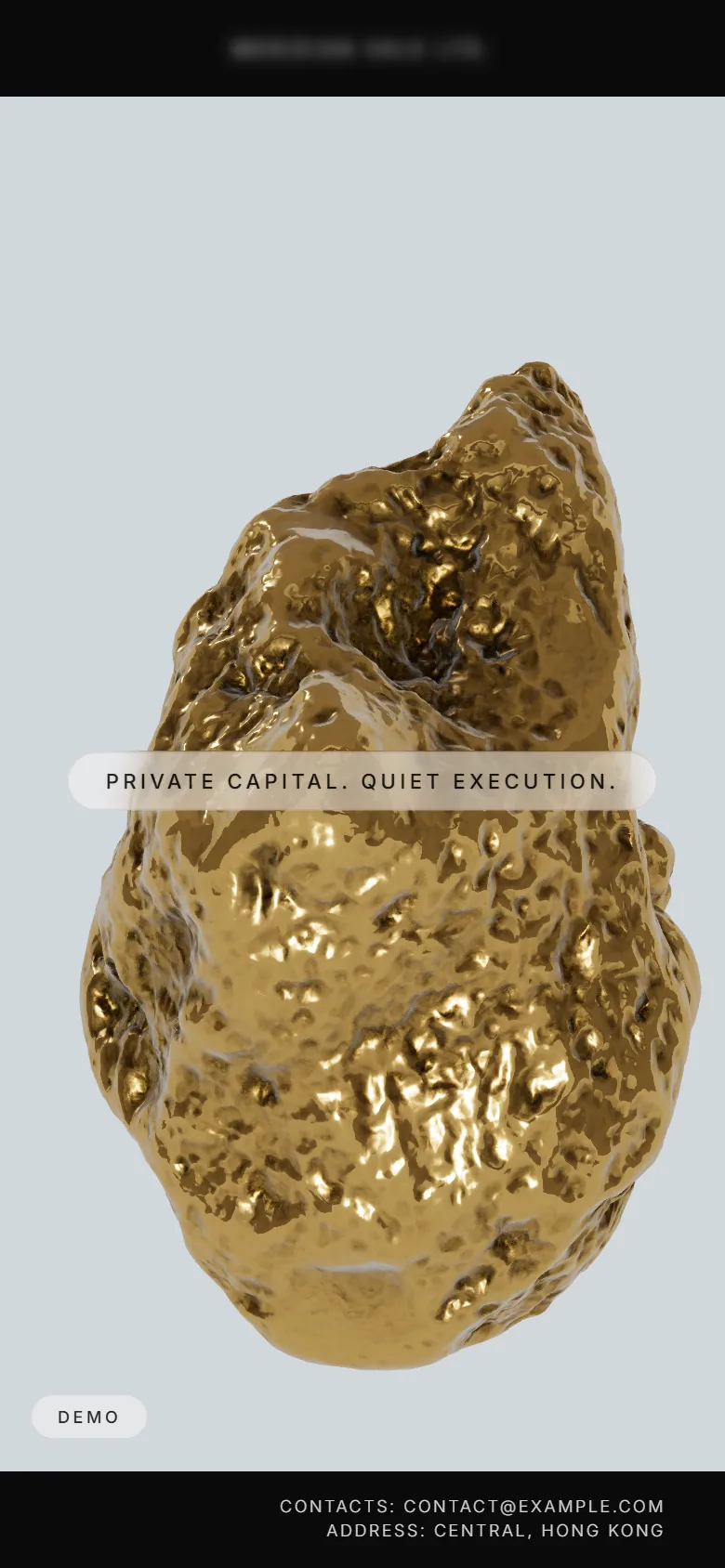
The entire product lives in one Scene.tsx of 345 lines. The centerpiece trick: a point light glides after the cursor, so highlights and shading sweep across the rotating gold as if the visitor carried a lamp around a sculpture.
I.A point light follows the cursor
A pointLight of intensity 40 chases the pointer with a lerp factor of 0.14 per frame. The easing makes the light feel carried, not glued. Highlights and shading sweep across the rotating gold as the light moves, which reads as depth instantly.
II.A stock material rebuilt at runtime
The stock asset rendered as dirty gray metal: broken ao, light and metalness maps, wrong color spaces. The code switches the bad maps off and forces the physics of gold, metalness 1.0 and base color #d4af37, every time the model loads. Swap the model and the fix still applies.
III.A studio without an HDRI
Instead of loading a multi-megabyte HDR environment file, the scene builds its own softbox: 4 Lightformer rectangles inside a drei Environment, at intensity 0.75. Gold gets its long white highlights and the network transfers zero extra bytes.
IV.Film-grade output
ACES Filmic tonemapping at exposure 0.85 keeps the highlights on metal from clipping. Device pixel ratio is clamped to 1-2 so phones stay smooth, and the model preloads before the first frame. Antialiasing is on, the canvas asks for the high-performance GPU.
A stock asset never ships raw
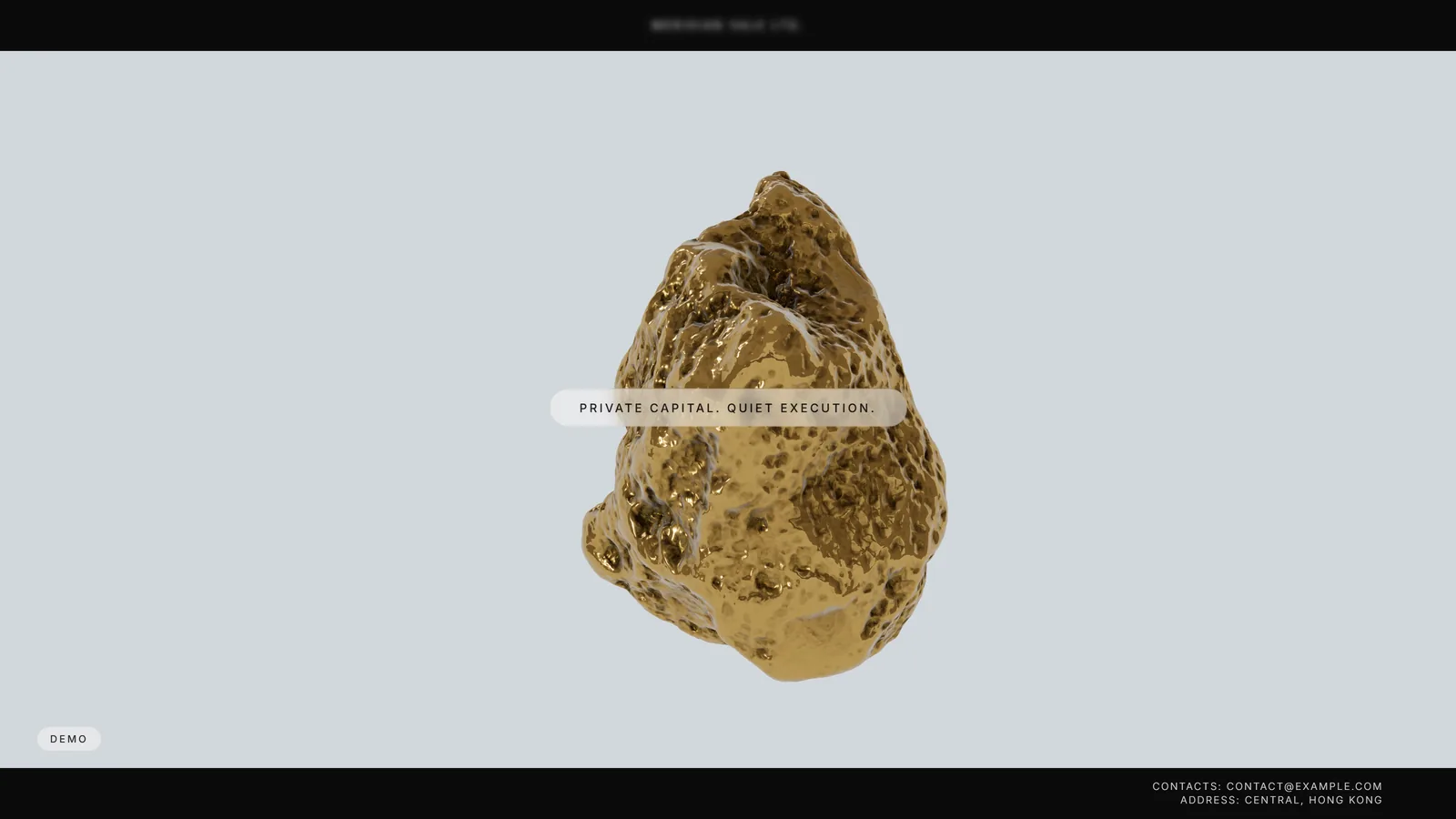
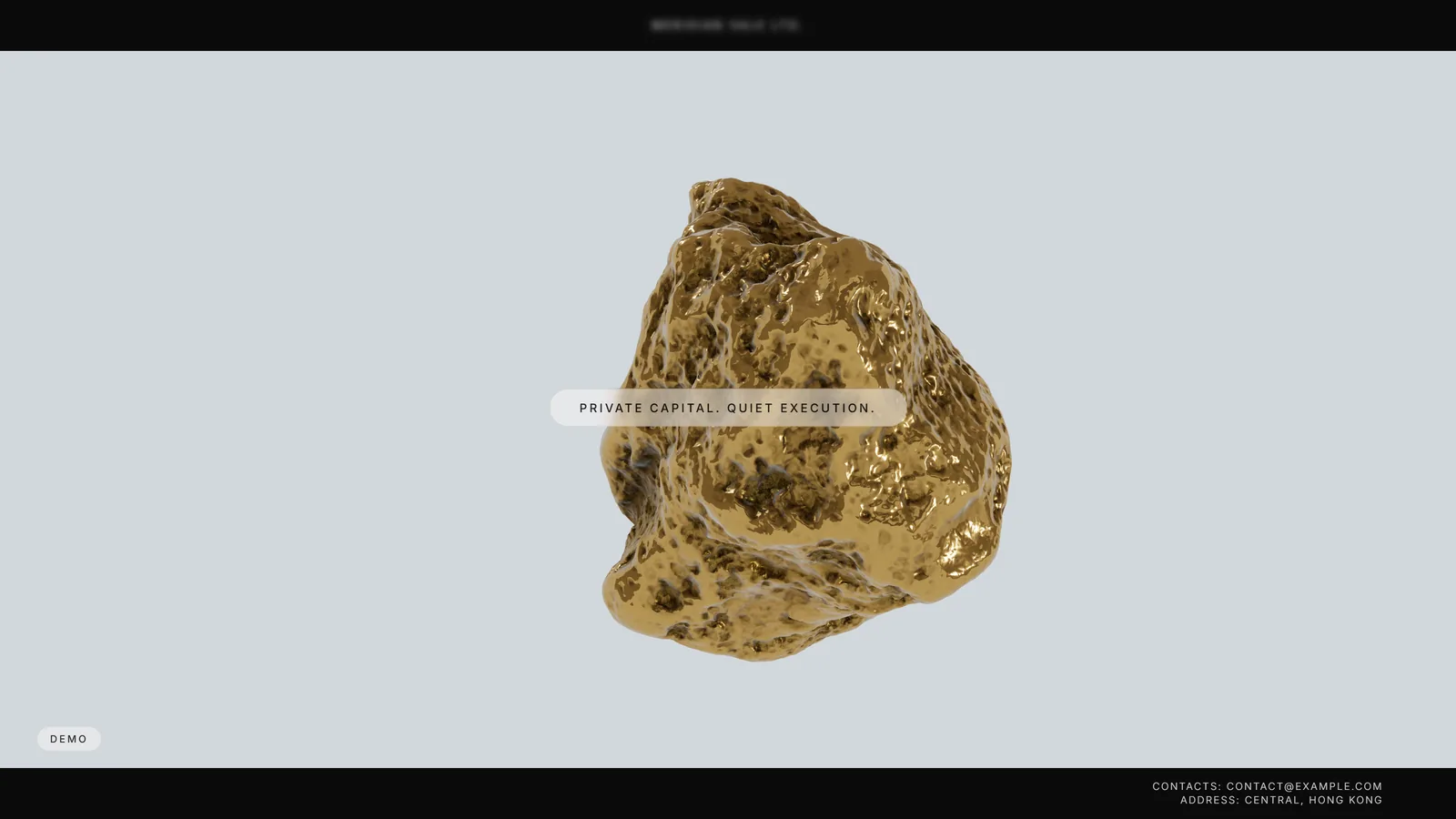
The nugget comes from a 3D stock. Loaded as is, it looked like gray dirty rock: broken maps, wrong color spaces, arbitrary scale. The scene sanitizes the material at runtime, in code, so any future model swap gets the same treatment for free.
- Normalize the geometry. The GLTF is cloned, auto-centered and auto-scaled by its bounding box to a target of about 5 units. Any stock model lands in the frame correctly.
- Force the physics of gold. Metalness 1.0, roughness 0.42, base color #d4af37, envMapIntensity 0.92 and a touch of clearcoat 0.06. The material is defined by the case, not by the stock file.
- Disable the broken maps. The stock aoMap, lightMap, metalnessMap and emissiveMap produced gray dirty patches on the metal. Switched off explicitly.
- Fix the color spaces. Base color to sRGB, normal and roughness maps to linear, anisotropy 8 for sharp texture at grazing angles, normalScale 0.55 to soften missing-tangent artifacts.
- Recompute and pin. Normals and bounding sphere are rebuilt, frustum culling is disabled so the model never pops out of the frame when its bounds leave the mathematical view cone.